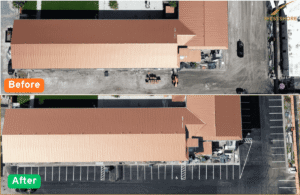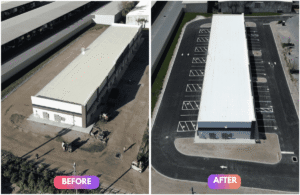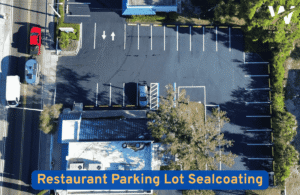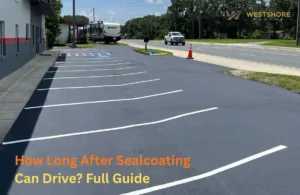

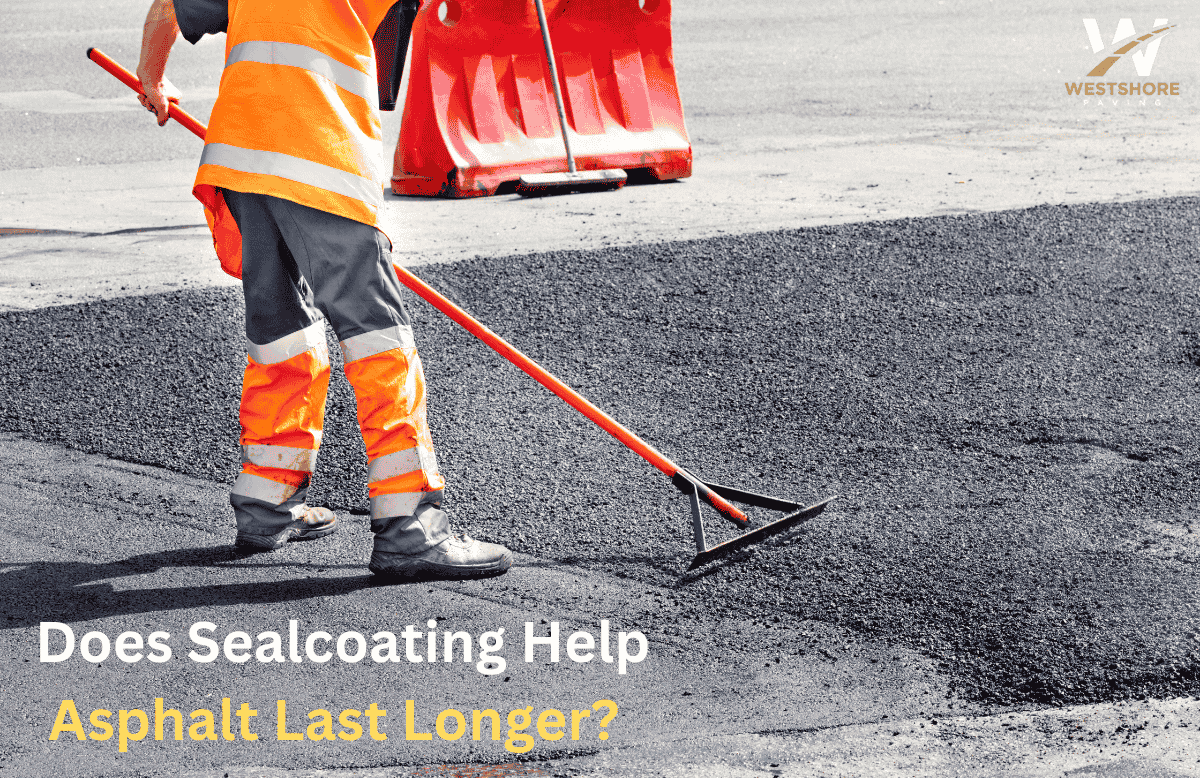
Putting sealcoat on your driveway or parking lot in Tampa is actually worth the effort, or if it’s just a cosmetic thing? Yes — sealcoating does help asphalt last longer, usually by 5–10 years when done on schedule in our kind of weather. We’ve been sealing asphalt around Tampa Bay for twenty-two years, and we see the proof every day: lots and driveways that get sealed regularly hold up way better than the ones that don’t. This guide is straight from real jobs we’ve done — how sealcoating actually works to extend life, when it makes the biggest difference, what kind of care keeps it going, and what happens if you skip it. No hype, just the facts so you can decide if it’s time for yours.
How Sealcoating Actually Protects Asphalt in Tampa
Tampa sun is tough. It dries out the oils in the asphalt binder and makes the surface brittle and gray. Then rain gets into tiny cracks, soaks down, and softens the base underneath. Over time that leads to bigger cracks, potholes, and eventually full replacement. Sealcoating puts a tough layer on top that:
- Blocks UV rays from drying out the binder
- Stops water from seeping into cracks and weakening everything below
- Keeps oil and gas from soaking in and breaking down the surface
- Slows oxidation so the asphalt doesn’t turn brittle as fast
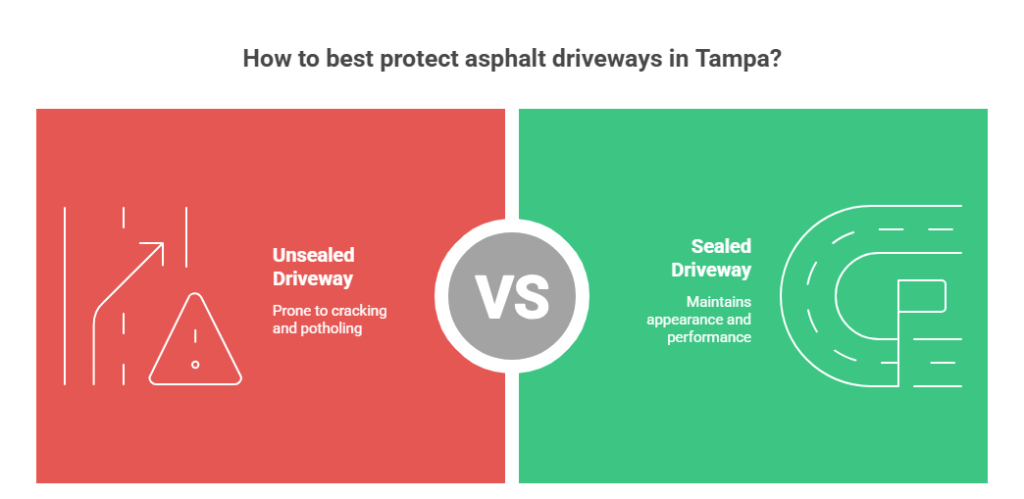
We’ve seen driveways sealed every 3–4 years still looking and performing good at 18–20 years. Ones that never got sealed? They start cracking and potholing by year 8–10. The difference is night and day.
When Sealcoating Makes the Biggest Difference
Sealcoating isn’t magic — it works best when the pavement is still in decent shape. It’s like sunscreen for asphalt: apply it early and often, and it prevents damage. It’s most effective when:
- The surface is starting to fade from black to gray
- Small hairline cracks are showing up
- Oil stains are soaking in instead of sitting on top
- The asphalt is 2–4 years old and has never been sealed
- You want to delay bigger repairs like patching or resurfacing
If you already have deep potholes, soft spots, or large alligator cracking, sealcoating alone won’t fix that — we’d usually recommend patching or milling first. But for early-stage wear, sealing is one of the best things you can do to stretch the life of the pavement.
How Often Should You Sealcoat in Tampa?
In our climate, the National Asphalt Pavement Association recommends sealing every 2–4 years. We usually tell people:
- First sealcoat: 1–2 years after new pavement (lets it cure fully first)
- After that: every 2–4 years depending on traffic, sun exposure, and how much water sits on it
- High-traffic commercial lots: closer to every 2 years
- Residential driveways with light use: every 3–4 years is usually fine
We’ve seen lots sealed on a 3-year schedule still looking solid at 15+ years. Skip it for 6–8 years and the surface dries out, cracks open up, and water damage starts showing.
What Happens If You Don’t Sealcoat Regularly
We see the results every week:
- Asphalt turns gray and brittle from UV damage
- Tiny cracks turn into wider ones as water gets in
- Oil and gas stains soak deep and break down the binder
- Base softens from water intrusion → potholes and sinking spots
- Full replacement needed 5–10 years earlier than it should
A commercial lot we looked at recently had never been sealed — it was gray, cracked all over, and holding water. The owner ended up needing full patching and sealcoating to stop it from getting worse. Sealing earlier would have saved a lot of money and headaches.
How We Do Sealcoating in Tampa
We keep the process simple and clean so your lot or driveway gets back in use fast.
- Clean the surface — Power wash, treat oil stains, remove loose material
- Fill cracks — Route and fill wider ones so water can’t get under the sealcoat
- Apply sealcoat — Two coats of commercial-grade sealcoat (we use coal-tar emulsion with sand for grip)
- Let it cure — 24–48 hours for foot traffic, 48–72 for vehicles
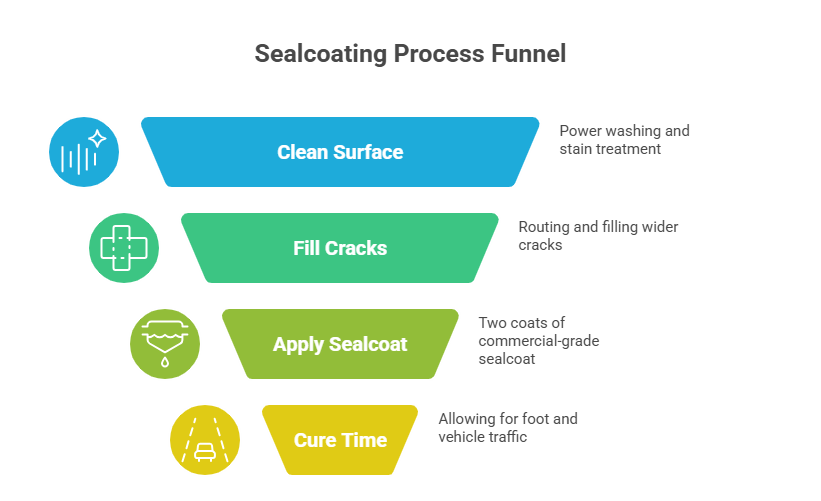
We time it for dry weather (no rain for 48 hours) and pavement temps above 50°F. Spring and fall are usually the best windows here.
FAQs
Does sealcoating really make asphalt last longer in Tampa? Answer: Yes — it blocks UV and water damage. Most lots we seal on schedule last 5–10 years longer.
How often should I sealcoat in Tampa? Answer: Every 2–4 years. First coat 1–2 years after new pavement, then every 3 years is common.
Can sealcoating fix existing cracks? Answer: No — we fill cracks first, then seal. Sealing over open cracks fails quickly.
How soon can I drive on the lot after sealcoating? Answer: Foot traffic in 24 hours, vehicles in 48–72 hours depending on thickness.
Is sealcoating worth it for low-traffic driveways? Answer: Yes — it still protects against sun and rain. Even light use benefits from the extra years.
How do I know if my asphalt needs sealcoating? Answer: Call 352-587-4016. We’ll come look and tell you straight.
Ready to Extend Your Pavement Life?
Sealcoating is one of the best ways to make asphalt last longer in Tampa weather. West Shore Paving has been doing this work for twenty-two years. If your lot or driveway is fading or starting to crack, Contact us or reach out at 352-587-4016 or jacob@westshorepaving.com. We’ll come out, check the surface, and give you an honest answer. Let’s keep your pavement in good shape.