
If you’ve ever wondered whether asphalt is actually a smart choice for a Florida home — you’re asking the right question. Florida weather is no ordinary weather. The heat, the rain, the humidity — it puts every surface to the test. And your driveway takes the full hit every single day.
At WestShore Paving, we’ve been installing and maintaining asphalt driveways in Florida weather for over 20 years. So we know exactly how asphalt performs here — the good, the not so good, and what you can do to make it last as long as possible.
Here’s the honest answer.
Asphalt and Florida Heat — Does It Handle It?
Let’s address the biggest concern first. Florida summers are brutal. Temperatures regularly push into the mid-90s, and the sun beats down on your driveway for hours every day. So what does that do to asphalt?
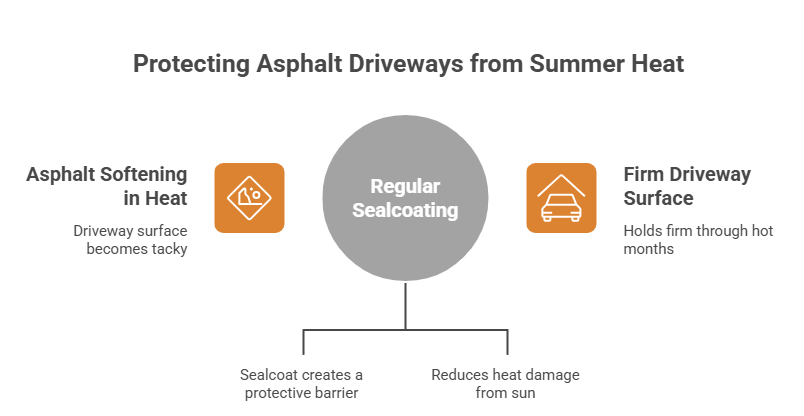
The truth is asphalt can soften slightly in extreme heat. On a really hot afternoon you might notice it feels a little tacky underfoot — especially on a freshly laid surface. For most homeowners this is barely noticeable and not a practical problem day to day. But if you’re parking a heavy commercial vehicle in the same spot repeatedly during peak summer heat, you could see some surface impressions over time.
The good news is this is very manageable. Regular asphalt sealcoating creates a protective layer over the surface that significantly reduces heat damage. Think of it like sunscreen for your driveway. It keeps the UV rays from breaking down the asphalt binder and helps the surface hold firm even through the hottest months.
What About Florida Rain and Humidity?
Heat is one thing — but Florida also gets absolutely hammered with rain. We’re talking afternoon thunderstorms almost every day from June through September, plus hurricane season on top of that.
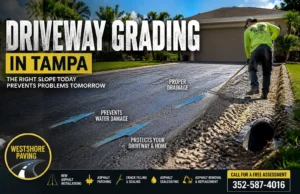
Here’s where asphalt actually performs really well. A properly installed asphalt driveway drains water efficiently and doesn’t absorb moisture the way some other surfaces do. The key word there is properly installed — the base underneath the asphalt matters just as much as the surface itself. A solid, well-graded base means water moves off and away from your driveway rather than sitting underneath it.
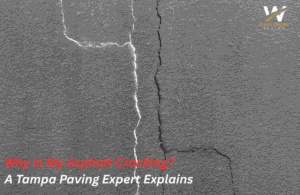
Where homeowners run into trouble is when small cracks go ignored. Water gets into those cracks, works its way into the base, and over time causes much bigger damage. That’s why we always tell people — don’t wait on crack filling and sealing. A small crack fixed early costs very little. A driveway with water damage underneath is a much bigger job.
How Often Should You Sealcoat Your Driveway in Florida?
This is one of the most common questions we get — and the answer is a little more frequent than people expect.
In most parts of the country, sealcoating every 4 to 5 years is standard. In Florida we recommend every 2 to 3 years — sometimes closer to 2 if your driveway gets full sun exposure all day.
Here’s why. The combination of intense UV rays, heavy rain, and high humidity accelerates the natural aging process of asphalt. Without a fresh sealcoat, the surface starts to dry out, fade, and become brittle faster than it would in a cooler climate. You’ll notice the color shifting from deep black to a faded grey — that’s your sign it’s time.
Sealcoating isn’t just about looks though. It’s genuinely protective. It seals out water, resists oil and fuel stains, and slows down the oxidation that causes cracking. Staying on top of it is honestly the single most effective thing you can do to extend the life of your driveway.
Our asphalt sealcoating service is quick, affordable, and makes a huge visible difference — most homeowners are surprised by how good their driveway looks after a fresh coat.
Signs Your Asphalt Needs Attention
Not sure if your driveway needs some work? Here’s what to look for:
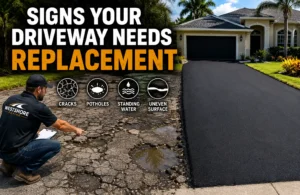
The surface has turned grey or faded — fresh asphalt is deep black. Fading means the protective oils are breaking down and it’s time to sealcoat.
You’re seeing small cracks forming — get these filled immediately before water gets in. Our asphalt crack filling service handles this quickly and affordably.
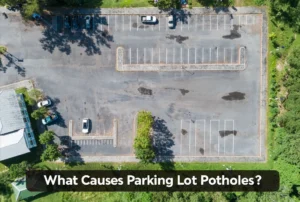
There are potholes or sunken areas — this usually means the base underneath has been compromised. Asphalt patching can fix isolated problem areas without replacing the whole driveway.
The surface feels soft or spongy — this is a sign of base failure and needs professional attention sooner rather than later.
So — Is Asphalt a Good Choice for Florida?
Absolutely yes — with one condition. You have to maintain it.
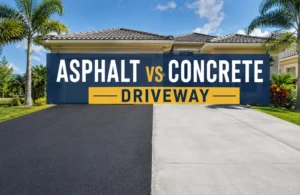
Asphalt is flexible, which helps it handle Florida’s shifting sandy soil better than rigid materials like concrete. It drains well, installs quickly, and when properly cared for it holds up beautifully through everything Florida throws at it — heat, rain, humidity and all.
The homeowners who are unhappy with their asphalt driveways are almost always the ones who ignored maintenance for too long. The ones who stay on top of sealcoating and address cracks early? They get 20 to 30 solid years out of their driveway without any major issues.
It’s really that simple.
Ready to Take Care of Your Driveway?
Whether you need a brand new driveway or just want to get your existing one back in shape, WestShore Paving is here to help. We’re a family-owned company based in New Port Richey with over 20 years serving homeowners across the Tampa Bay area.
📞 Call us at 352-587-4016 🌐 Request a free quote here
Explore our services:
- Asphalt Sealcoating
- Crack Filling & Sealing
- Asphalt Patching
- New Asphalt Installations
- Asphalt Removal & Replacement
WestShore Paving — Family Owned & Operated | New Port Richey, FL | Serving All of Tampa Bay